Buyer's guide · · 7 min read
French Terry vs Fleece: Choose a Hoodie for Your Print
Compare loopback French terry and brushed sweatshirt fleece. Understand fiber, yarn, fabric, GSM and print-surface checks before choosing a hoodie.
By MadeOnBlank guides · Supplier-published guidance
Short answer
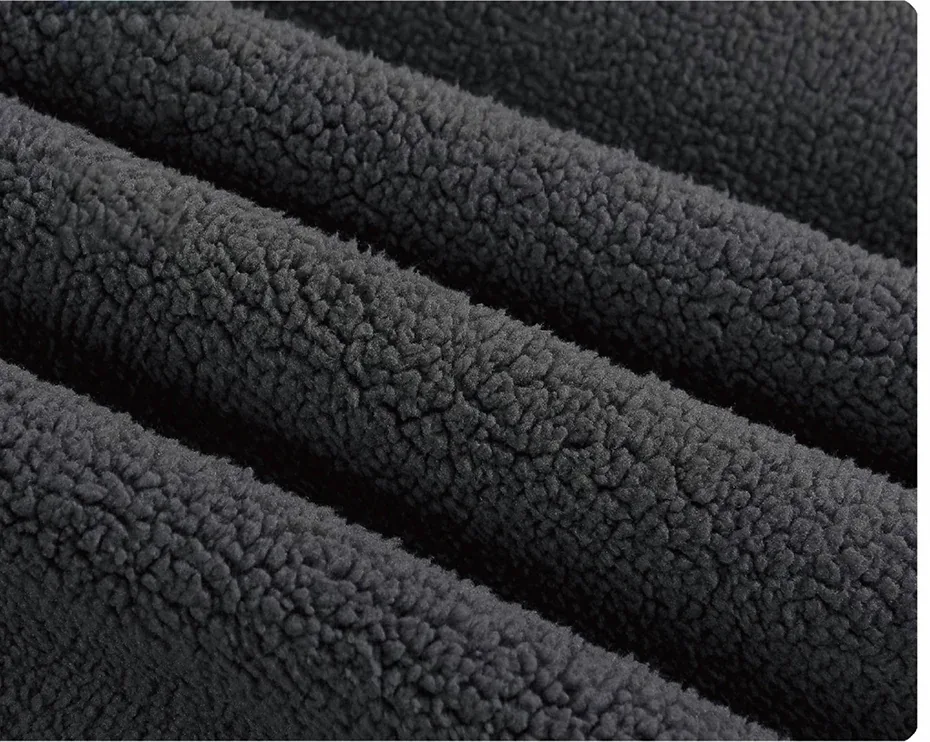
French terry usually has visible loops on the inside; brushed sweatshirt fleece has a raised, fuzzy inner surface. These names describe construction and finishing, not fiber content or a quality grade. For a printed hoodie, compare both fabric sides, composition, finished GSM, fit and a decorated sample.
On this page
Turn the hoodie inside out before comparing the product names. Visible loops and a raised, fuzzy surface tell you different things about the interior. Neither tells you the complete fiber composition, how the outside will print or whether the fit is right.
This guide compares loopback French terry and brushed sweatshirt fleece. “Fleece” is also used for other pile fabrics and separate linings. Ask what the seller means rather than treating every fleece listing as the same material.
Understand the chain: fiber, yarn, fabric and garment
Each word answers a different question. Cotton is a fiber; it is not a weave, a garment fit or a print method.
| Layer | Meaning | Question for a hoodie order |
|---|---|---|
| Fiber | The material used to make a textile, such as cotton or polyester | What is the stated composition? Is it complete, and which part of the garment does it describe? |
| Yarn | Fibers or filaments formed into a strand used to make fabric | What yarn information is available? Is an outer-face description different from the overall blend? |
| Fabric | Yarns assembled into a structure; knits use loops and wovens use interlaced yarn systems | Is the body loopback, brushed sweatshirt fleece or another construction? What do both sides look like? |
| Finished garment | Fabric cut and sewn into a shape, with trims and finishing | What are the size measurements, hood construction, seams, rib trims and print locations? |
Spinning choices can affect a yarn’s surface and behavior. Knitting and finishing add further variables. A claim such as “cotton hoodie” therefore leaves the yarn, structure, finished weight and garment shape unresolved. You do not need to specify a mill’s entire process to order a print, but you do need enough information to compare the garments you are considering.
Compare the inside and the outside separately
| Check | Loopback French terry | Brushed sweatshirt fleece |
|---|---|---|
| Inside | Loops are usually visible | Brushing raises a fuzzy inner surface |
| First sample question | Does the loopback feel suit the way the hoodie will be worn? | Does the raised interior have the intended feel and bulk? |
| Outside | Inspect its actual smoothness, texture and finish | Inspect its actual smoothness, texture and finish |
| Information still missing from the name | Fiber percentages, GSM, stretch, care, shrinkage and print compatibility | Fiber percentages, GSM, stretch, care, shrinkage and print compatibility |
| Buyer decision | Compare the complete garment for layering and intended use | Compare the complete garment for layering and intended use |
The inside does not automatically describe the outside. A cotton-rich face over a blend, for example, is a separate specification to confirm; do not infer it from the total cotton percentage. Ask for face and reverse photos and retain any unresolved composition questions.
Use GSM without turning it into a quality score
GSM means grams per square meter of fabric. Finished-garment weight also includes the amount of fabric used, size, hood layers, rib and other components. A shipping weight in kilograms is a different measurement again.
When comparing two listed weights, ask whether they refer to finished fabric and what part of the garment is included. The same stated GSM can accompany different thickness, drape and surface texture. For measurement and sample questions, use the heavyweight hoodie guide.
Match the print to the actual outer face
Before choosing DTG or DTF, send the garment reference, color, stated material and the original artwork at its intended dimensions. Flag zippers, pockets, raised seams and any finish that may affect the selected area.
Ask the technical team to assess the surface and print setup. For heat-applied work, heat sensitivity, adhesion and possible color migration are review questions. For direct-to-garment work, the face, preparation and curing need review. Neither question is answered by “French terry,” “fleece” or a high GSM alone.
Compare a small chest mark and a large solid graphic at the sizes you intend to sell. They can cover very different amounts of fabric even on the same hoodie. A digital mockup shows placement; it does not show print feel or verified care performance.
Follow three decisions before ordering
- Do you know the intended feel and use? If not, compare physical garments or swatches. A screenshot cannot settle hand feel or bulk.
- Do you have enough product information? If composition, inside construction or measurements are missing, ask for those details before treating two listings as equivalent.
- Is the decorated combination checked? If the fabric, color, artwork or process changes, identify which checks need repeating. Approval of one combination does not automatically approve another.
Keep a short comparison record
Use one column per garment and record the style, color, supplier-listed composition, inner surface, finished GSM if documented, size measurements, print area and unanswered questions. Add the sample version and your observations after it arrives.
Download the blank fabric comparison worksheet. It is a preparation template, not a laboratory report or a product standard. Unknown fields should remain “to confirm.”
Start with a listed style in the apparel catalog, then use the printed-sample checklist to review the garment and artwork together. For a batch or ongoing store orders, send a short printing brief; a detailed material worksheet is optional at the first conversation.
Common questions
Is French terry always cotton?
No. French terry describes a knit construction, not a fiber percentage. Ask for the stated composition and, where relevant, separate information about the outer face, inner yarns and rib trims.
Is fleece always warmer than French terry?
A brushed interior can change insulation and feel, but the name alone does not establish warmth. Fabric weight, thickness, structure, garment coverage and intended use also matter. Compare the actual garments rather than assigning a temperature rating.
Does a higher GSM mean a better print?
No. GSM is fabric mass per area. The printing surface, fiber composition, color, finishes, artwork and print setup need separate review. Fabric weight does not certify print detail or wash life.
Can both fabrics use DTG or DTF?
The fabric name is not a compatibility approval. Ask the print team to review the actual outer face, composition, color, finishes and design. A decorated sample is the reference for the chosen combination.
Sources & scope
General textile education and a garment-comparison worksheet. Fiber content, fabric structure, GSM and print compatibility require product-specific evidence; no warmth rating or garment test is claimed.
- CottonWorks: knit basics
General knit-structure education; not a specification, test or endorsement of a MadeOnBlank garment.
- CottonWorks: yarn spinning
General explanation of the fiber-to-yarn stage; not evidence of the yarn used in our products.
- CottonWorks: fleece and French terry fabric examples
Examples of textile constructions; not a specification or endorsement of our garments.
Technical reviewer: pending confirmation. Use the guide to prepare your brief. Product and process approval still requires the actual garment, artwork and order review.
Publishing team, evidence standards & corrections →Put your artwork on a garment.
Start with your own piece, or plan a batch for your brand.